

Have you discovered our new story map, Place Names of Bularl di Wunami? Click here to learn more!
Naming guidelines
We are committed to the continued recognition of Aboriginal cultural heritage by capturing and recording the original place names and connection to geographical features and places. To do this, Landgate has published a guideline to Aboriginal naming and dual naming of features and places in Western Australia, to provide a framework for Aboriginal place naming in WA.
While the guidelines are specific to the naming of geographical features and places, Aboriginal names can be and are applied to roads and localities.
What is Aboriginal naming?
The restoration of an Aboriginal name to be used officially provides recognition to the Aboriginal name and assists in reawakening the language of that area.
What is dual naming?
Did you know there are more than 50 places that are dual named in WA? Dual naming is the approach whereby geographical features or places are officially recognised by two distinct names. One name is usually of Aboriginal language origin and the other of non-Aboriginal origin. Where a feature is currently identified by an existing non-Aboriginal name, an Aboriginal name can be put forward to be assigned as a dual name and sit alongside this name.
Aboriginal and dual names in WA
Below are some name examples found across WA.
Aboriginal naming:
Little Sandy Desert
- Kumpupintil Lake (formerly Lake Disappointment)
Lake Argyle
- Bilbiljim (formerly Mount Misery)
Fremantle
- Walyalup Koort (formerly Kings Square)
Dual naming:
Albany
- Mammang Koort / King George Sound
- Doggerdirup / Bald Head
Broome
- Yawuru Nagulagun / Roebuck Bay Marine Park
- Lalang-garram / Horizontal Falls Marine Park
Aboriginal place names map
Landgate’s Aboriginal place names map is an interactive online map that shares Aboriginal place names, language and cultural stories uncovered as part of our Place Names Maali project from within the City of Swan. It also brings together story maps by locality, including Place Names Maali and Place Names of Bularl di Wunami, to make Aboriginal place names and their meanings more accessible to the community.
These story maps form part of Landgate’s reconciliation work by sharing historical Aboriginal place names, language and cultural stories connected to locations across Western Australia.
Explore the Aboriginal place names map and discover our interactive story maps: Place Names Maali and Place Names of Bularl di Wunami.
Our story maps
Place Names Maali
Launched in 2024, Place Names Maali is the inaugural story map on Landgate’s Aboriginal place names map. It is a reconciliation and truth‑telling initiative that supports the revival and sharing of Aboriginal language.
The story map features the decoded names, meanings and pronunciations of 18 geographical locations across the City of Swan, revealing the cultural significance and history of Midland and its surrounding areas.
Delivered in collaboration with the City of Swan, Moodjar and the Maali miy (Voice of Swan Decoding Group), Place Names Maali brings together location, video and language insights to connect story to language and place in the City of Swan.
Place Names of Bularl di Wunami
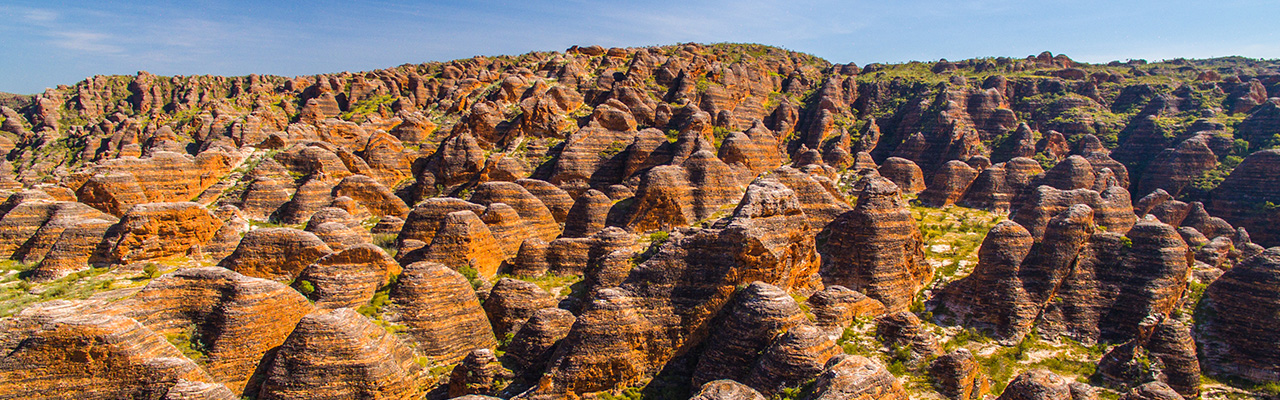
Place Names of Bularl di Wunami explores nine Aboriginal place names within the locality formerly known as the King Leopold Ranges, showing how language, place and Country are connected in the Shire of Derby-West Kimberley.
The locality was officially renamed Bularl di Wunami in February 2026 following extensive consultation with Traditional Owners, local government and emergency services. The process was supported by First Nations consultants NyikBar Consulting and formally approved by the Minister for Planning and Lands. This followed the renaming of the physical ranges themselves to Wunaamin Miliwundi Ranges in 2020.
The approved name combines the Ngarinyin words "Bularl di" (rocky country) and Bunuba word "Wunami" (big range country). This acknowledges both the physical landscape and the enduring cultural, linguistic and historical connections to Country of the local Traditional Owners.
The renaming replaces references to a former Belgian King whose legacy includes documented atrocities, restoring a name that reflects the cultural significance of the location.
How you can help
Any individual, group or organisation can propose an Aboriginal name be restored and recognised as an official name. Such proposals must be endorsed by the relevant Traditional Owner group(s) and have local government support. If you know of an Aboriginal place name that is not officially named or is incorrect, or a non-Aboriginal place name that may cause offence to Aboriginal people, please contact the relevant local government.